

Sustainability ROI: how to drive profit and resilience in logistics
The era of treating sustainability as a regulatory checkbox is over. Today's transport and logistics leaders face a stark reality: companies that view environmental responsibility as merely compliance overhead are leaving money on the table while competitors race ahead.

Key Takeaways
- Sustainability is ROI, not just compliance: emissions transparency enables cost cuts (fuel, routing, utilization) and resilience advantages.
- Measure → manage → profit: logistics leaders use operational KPIs (e.g., emissions per delivery / ton-km) as business intelligence, not reporting output; proxy data can deviate 30–40%+ from reality.
- Three “engines” to operationalize it: compliance & accounting, data ingestion, and Book & Claim (auditable green freight services without physical fuel constraints).
Action checklist
- Replace proxy averages with traceable emissions + fuel/route data where possible.
- Tie CO₂e KPIs to financial steering (cost centers, profitability, risk).
- Add Book & Claim as a scalable lever for auditable reductions alongside operational optimization.
Logistics contributes about 10% of global carbon emissions, positioning the industry at the heart of the challenge – and the opportunity. Masters of this shift won't merely survive; they'll dominate.
By and large, companies are continuing to invest in sustainable solutions. Despite economic pressures, many corporations are doubling down on sustainable investments, with PwC's latest decarbonization report revealing that 84% remain committed.
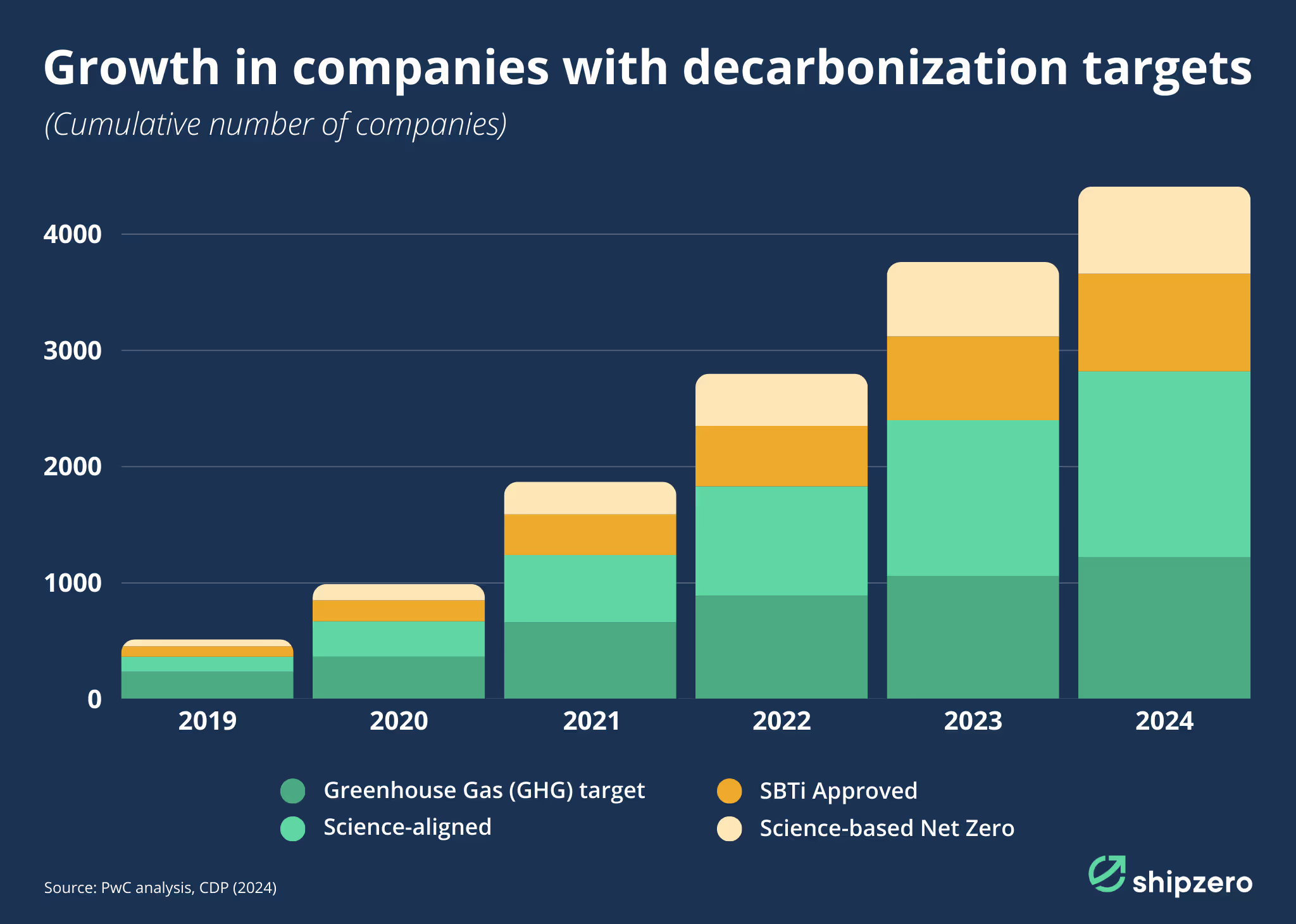
According to Morgan Stanley, 88% of companies globally view sustainability as a potential driver of long-term value. More than 80% say they can measure returns on investment for sustainability-related projects.
To achieve this goal, advanced traceability and transport emissions monitoring are no longer optional; they are essential for competitive advantage. When you can track fuel consumption, route optimization, and carbon output, you unlock operational improvements that directly impact your bottom line.
Sustainability ROI: measurable outcomes drive measurable results
The most successful logistics companies have learned a fundamental truth: what gets measured gets managed, and what gets managed drives profit. Sustainable logistics not only helps reduce the carbon footprint but also enhances operational efficiency, cuts costs, and boosts the overall brand reputation.
This requires moving beyond broad environmental statements to precise, actionable metrics tied directly to business outcomes. Fuel efficiency per ton-kilometer and emissions per delivery become leading indicators of both environmental impact and financial performance.
Forward-thinking companies are discovering that sustainability data isn't just reporting material – it's a strategic asset that drives competitive advantage. When environmental metrics are integrated into core business intelligence, they reveal optimization opportunities that traditional financial metrics would miss.
Smart logistics leaders are building their competitive moats around comprehensive emission management data platforms to pinpoint vulnerabilities, diversify sourcing, strengthen transparency and anticipate risks before they escalate. A supply chain that adapts faster than your competitors’ is a growth driver. Redesigned value chains and networks transform risk management into a source of long-term ROI, and sustainability data is an untapped lever.
CFOs must now integrate sustainability data into financial systems alongside profit and cost centers to capture true value. Many disclosures still rely on proxy data, such as industry averages, which can result in deviations of 30-40% or more from real values.
Three engines powering one mission
This is where platforms like shipzero step in, transforming these challenges into opportunities. As the industry's leading transport emission management platform, shipzero empowers carriers, logistics service providers, and cargo owners to turn mandatory reporting into a strategic intelligence tool, providing the visibility and insights needed to optimize operations while exceeding compliance standards.
Mastering the energy transformation of global supply chains requires a unified approach across three critical dimensions:
- Compliance & Accounting: Complete visibility into the carbon footprint of your supply chains and regulatory obligations provides the foundation for both compliance and optimization. This isn't just about meeting today's requirements – it's about building the infrastructure for tomorrow's opportunities.
- Data Integration: Your sustainability infrastructure should enhance your operations, not complicate them. shipzero connects seamlessly with existing systems, delivering comprehensive insights without overwhelming your teams.
- Book & Claim: With this innovative approach spearheaded by shipzero, carriers and logistics service providers purchase certificates representing sustainable fuel production without physically using the fuel. Companies can market sustainable investments in their fleet and transport structure and offer their customers – those shipping products – new auditable green freight services.
Download our white paper for logistics companies (in English or German) or about gaining competitive advantages through Book & Claim.
Each engine reinforces the others, creating a comprehensive platform that turns environmental responsibility into operational excellence.
Sustainability ROI: the bottom line
The companies that will dominate transport and logistics in the next decade aren't just adapting to sustainability requirements – they're leveraging them as strategic advantages. Technology greatly aids the introduction of logistical sustainability, determining the most efficient transportation routes and reducing unnecessary fuel consumption, and associated emissions.
By 2030, leaders projecting 20-30% cost reductions through emission-optimized logistics will outpace laggards. Platforms like shipzero are the catalyst, integrating crucial data for decisions that drive ROI.
Assess your sustainability ROI today: schedule a call to see how emission management can reshape your bottom line.


Related articles