

Emissions Intelligence for Automotive Logistics
Automotive: Navigating complex standards with emissions intelligence
Automotive logistics faces unique challenges: industry-specific standards like ECG/VDA, highly diverse transport structures from components to finished vehicles, and economic pressure limiting sustainability investments. shipzero helps both logistics providers and cargo owners achieve precise CO₂e tracking across both component and vehicle transport, comply with ECG/VDA and ISO 14083 requirements, and identify viable decarbonization pathways.

Trusted by Automotive Industry Leaders


.avif)
.svg)
The Problem
Key pain points of the automotive industry
The automotive industry faces economic pressure and high demands for CO₂ transparency. Logistics providers must navigate complex, industry-specific standards such as ECG/VDA and ISO 14083 while managing diverse transport operations, and cargo owners need reliable data to meet their own sustainability commitments.

Economic pressure and investment constraints
The automotive industry experiences market pressure from declining margins, limiting new sustainability investments. However, regulatory and customer demands for CO₂ transparency remain high, creating a challenge for both logistics providers and cargo owners to balance resource constraints with compliance.
Highly heterogeneous transport structures
Automotive logistics handles both component transport (small, fragmented shipments) and finished vehicle transport (large volume goods). This diversity in fleets, transport types, and routes requires different calculation logic, making emissions tracking complex.
Automotive-specific standards and requirements
The ECG/VDA standard is central, evaluating emissions by volume rather than weight, with many special rules. Both logistics providers and cargo owners must adhere to these clear, standardized requirements for accurate emissions reporting and compliance across global supply chains.
“We feel comfortable and confident that we have found the right service provider. shipzero responds to our individual needs and finds customized solutions.”
.avif)

The Product
This is the way how we overcome your challenges
shipzero delivers precise emissions intelligence for the automotive industry, supporting standards such as ECG/VDA. Our platform covers both component and vehicle transport, integrates with tracking systems for global supply chain visibility, and models combined transport and modal shift scenarios.

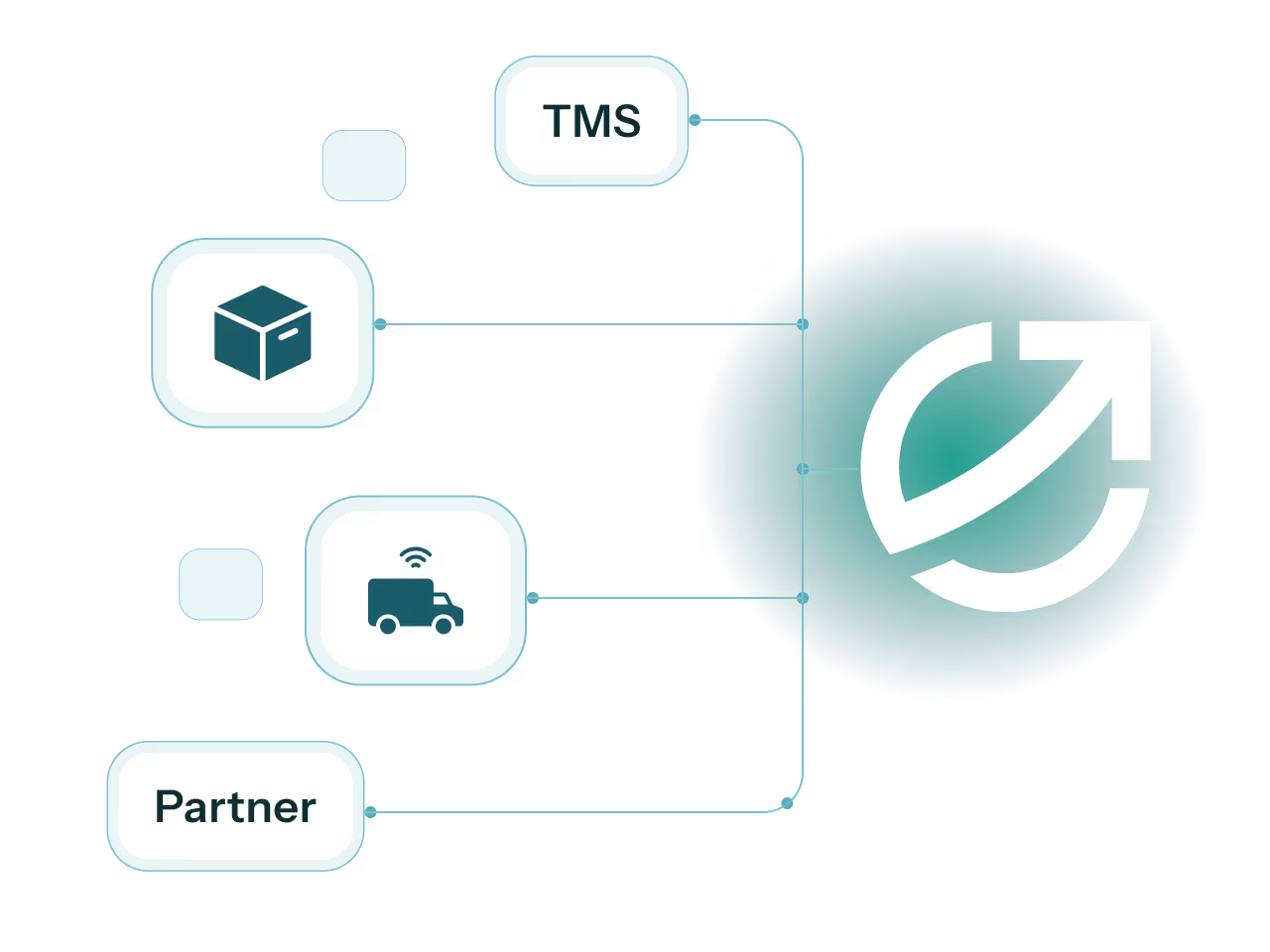
Data Ingestion
Comprehensive integration for diverse automotive transport operations
Connect component logistics and vehicle transport systems to create unified emissions visibility across your automotive supply chain.
- Seamless connectivity to TMS common in the automotive industry
- Automated harmonization of combined transport data
- Integration with tracking tools for global supply chain transparency
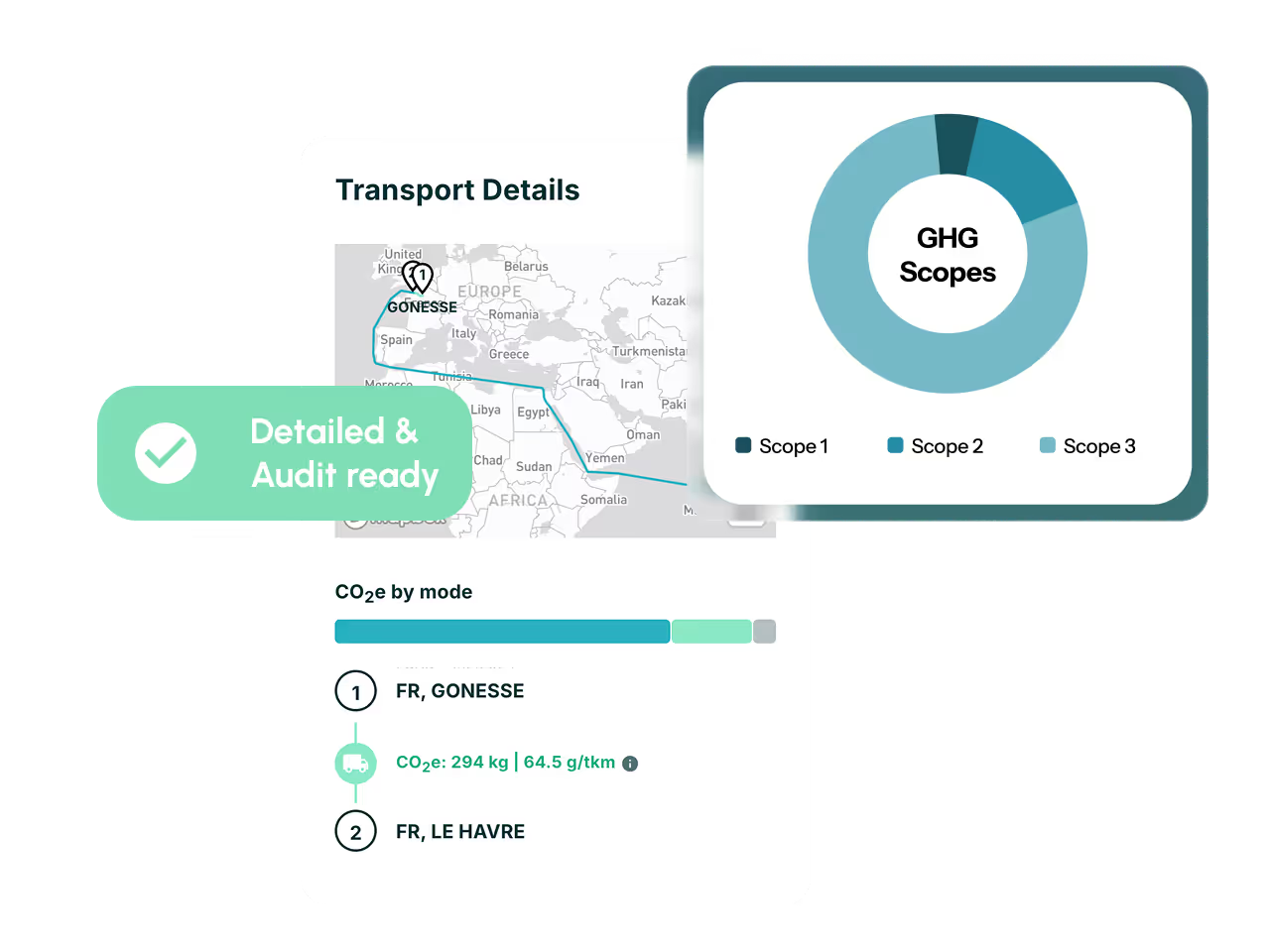
Compliance & CO₂ Transparency
Industry-standard compliance with ECG/VDA and global reporting frameworks
Meet automotive enterprise requirements with precise calculations that follow industry-specific standards and methodologies.
- Accurate modelling of combined transport and RoRo ship emissions
- Differentiated calculation logic for vehicle transport and components
- Full support for ECG/VDA, ISO 14083, the GLEC Framework, and the GHG Protocol standards

Decarbonization
Viable pathways for automotive logistics decarbonization
Identify realistic reduction opportunities within the constraints of automotive transport operations.
- Book & Claim for premium and OEM segments, using a validated Smart Freight Centre-aligned system
- Battery-electric vehicle simulation including ROI analysis
- Modal shift analysis to identify high-impact reduction levers across road, rail, and maritime routes
Tailor-made solutions for cargo owners & logistics service providers
Discover how companies across the supply chain use shipzero to tackle their transport emissions challenges and find the use cases that match your priorities, from Scope 3 transparency to audit-ready reporting.

Cargo Owners
Full Scope 3 transparency & data analysis
Gain end-to-end visibility into your supply chain emissions and identify the most effective reduction levers to reach your decarbonization goals.


Logistics Companies
Effortless customer reporting
Meet growing customer demands with automated emissions reporting at shipment level, and strengthen your competitive edge in every tender.

FAQs
Common questions about emissions intelligence for automotive logistics
Yes. shipzero fully supports the ECG/VDA standard, which is central to automotive logistics emissions reporting. Our platform applies volume-based calculation logic for finished vehicle transport and weight-based logic for component logistics, ensuring compliance for both logistics providers and cargo owners.
shipzero accommodates both component and finished vehicle transport with differentiated calculation approaches. Component and parts logistics are calculated based on weight, shipment count, or pallets, while finished vehicle transport uses volume-based concepts that account for vehicle type differences – all within a single emissions intelligence platform.
Yes. shipzero accurately models RoRo emissions as part of multimodal automotive supply chains, providing complete visibility across road, rail, and maritime transport modes for both logistics providers and cargo owners.
shipzero is a pioneer in Book & Claim with its own validated system aligned with Smart Freight Centre MBM guidance. For automotive logistics, this means both logistics providers and cargo owners can apply Book & Claim at the individual vehicle level, specific shipment level, or entire route level. shipzero's Book & Claim methodology is independently audited by Müller-BBM Cert, ensuring claims meet the integrity requirements of the Smart Freight Centre MBM Framework.
Yes. shipzero models BEV fleet scenarios including ROI analysis, charging infrastructure requirements, and emission reduction effects. This helps to evaluate business cases for electrification and make informed investment decisions.