
shipzero for food industry
Food logistics is highly specialized. Your emissions intelligence should be too.
Food logistics faces unique challenges: high emissions from refrigerated transport, complex multi-hub networks, and fragmented shipment structures. shipzero helps you achieve transparent CO₂e tracking across the entire network – from inbound to outbound, hub to last mile – while supporting your decarbonization strategy with alternative fuel options and Book & Claim, in line with ISO 14083 and the GLEC Framework.

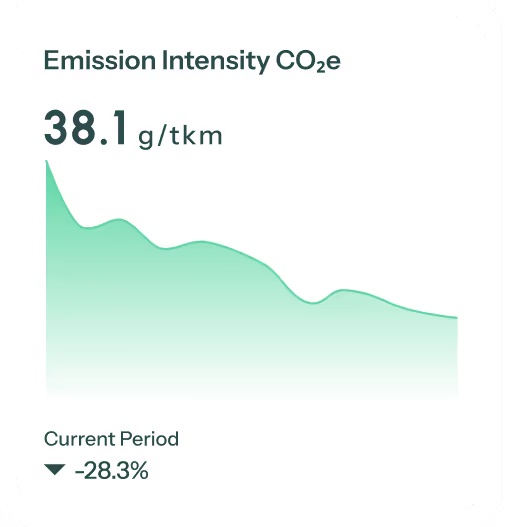
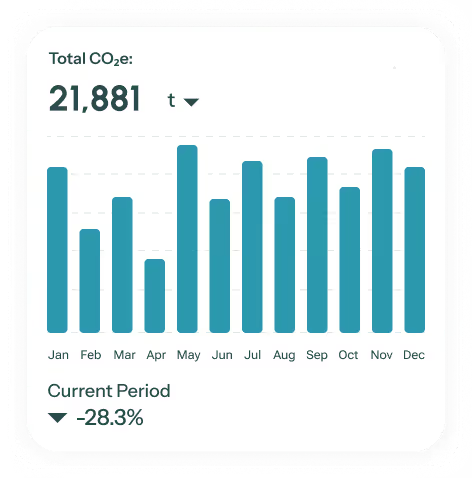
Used by leading food companies



.avif)


The Problem
Key pain points of the food logistics industry
Temperature-controlled transport generates significantly higher emissions than standard freight, putting food logistics under increased scrutiny from cargo owners and regulators. Accurate tracking and transparent reporting are no longer optional: they are essential for maintaining business relationships and meeting regulatory and audit requirements.

High CO₂ intensity from temperature-controlled transport
Refrigerated and frozen transport generates above-average emissions, creating higher regulatory and reputational risk. Cargo owners are intensifying pressure for reliable CO₂ tracking, making transparent emissions data critical for maintaining contracts and demonstrating environmental responsibility in a high-emission sector such as refrigerated and frozen transport.
Complex, fragmented transport networks
Food logistics involves numerous small shipments with low weights, consolidated across multiple hubs, distribution centres, and last-mile operations. This creates significant complexity in data capture, emissions allocation, and network modelling – making it difficult to accurately reflect actual transport realities in reporting.
Unclear responsibilities and compliance questions
Who bears the emissions – cargo owners, retailers, or logistics providers? Different Incoterms create uncertainty in emissions accounting, leading to gaps in responsibility and potential double-counting. Clear allocation rules and transparent data exchange are essential but often difficult to establish without a shared emissions intelligence platform..
“Thanks to shipzero’s profound data granularity approach and focus on primary data integration, our data accuracy improves significantly – we are gaining a full overview of transport emissions within our supply chain.”

“Thanks to shipzero, we can now specifically show our customers where they stand in the ranking of CO2 transport emissions reduction.”


The Product
This is the way how we overcome your challenges
shipzero delivers comprehensive emissions intelligence tailored to the demands of complex, temperature-controlled supply chains. Our platform excels at modeling fragmented networks, accurately allocates emissions across consolidated shipments, and supports both inbound and outbound operations. This gives you the transparency and data quality needed for compliance and strategic decarbonization of temperature‑controlled transport..

Data Ingestion
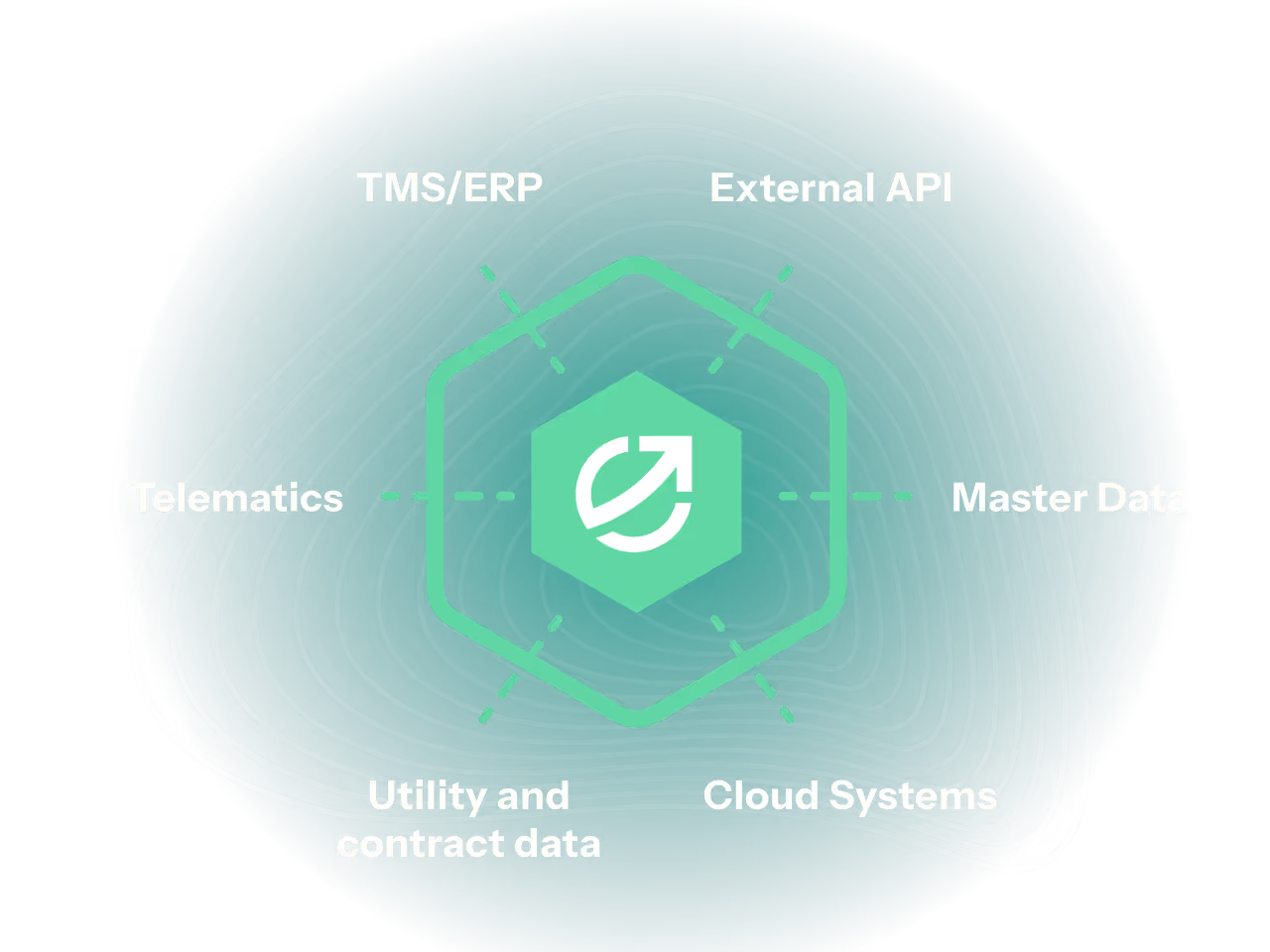
Comprehensive network data integration for complex food supply chains
Capture emissions across your entire food logistics network – from multi-hub consolidation to last-mile delivery – with minimal internal effort.
- Seamless connectivity to TMS, ERP, fleet telematics etc
- Automated harmonization of fragmented shipment data
- Continuous data quality monitoring ensures accurate allocation
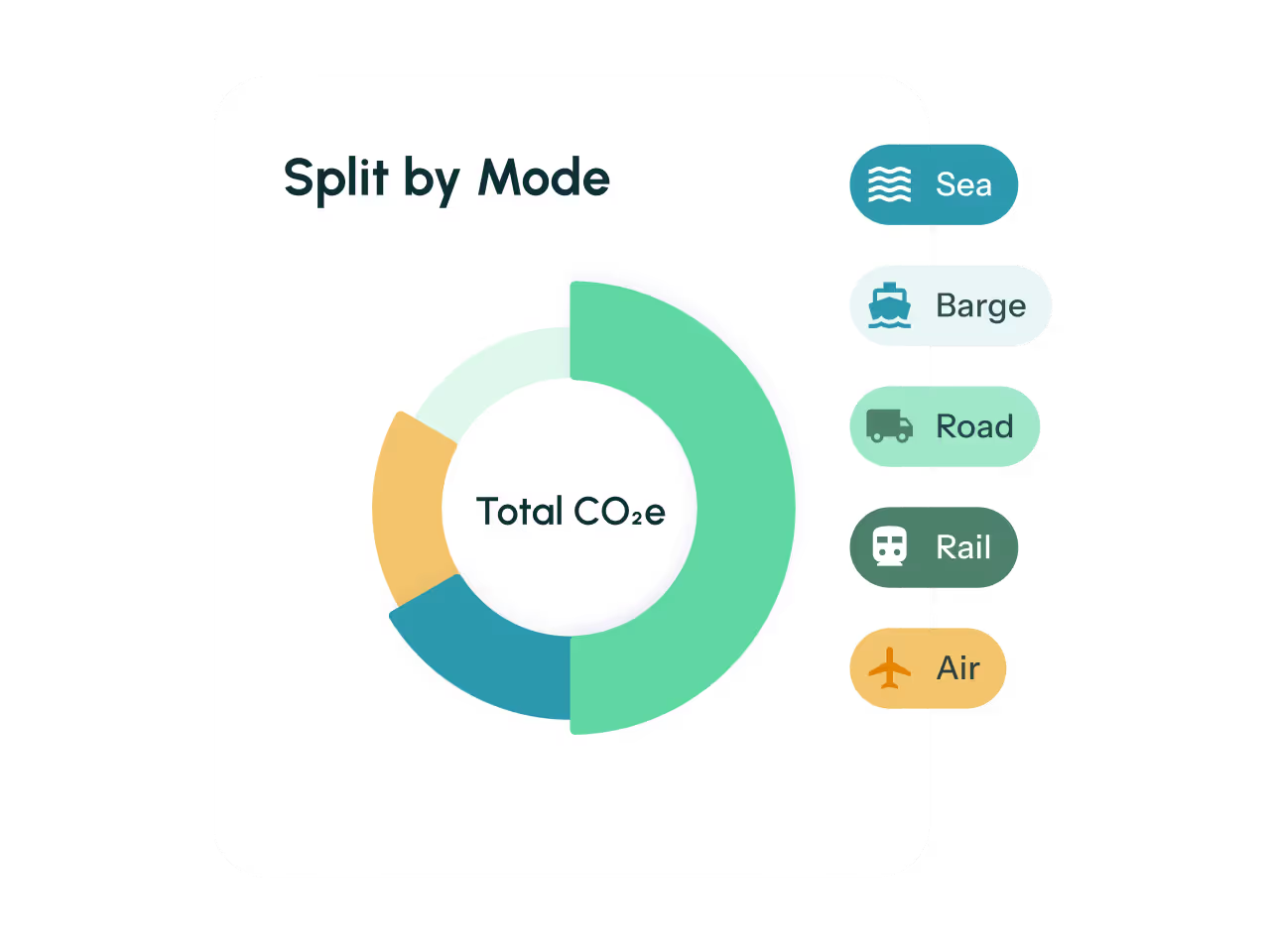
Compliance & CO₂ Transparency
Transparent emissions tracking across inbound and outbound operations
Build a complete picture of your food supply chain emissions with granular visibility and clear responsibility allocation.
- Granular calculation of Scope 1 & 3 emissions at shipment level
- Clear responsibility allocation based on Incoterms
- Full alignment with ISO 14083, the GLEC Framework, and the GHG Protocol

Decarbonization
Strategic pathways for reducing emissions in food logistics
Identify and implement the most effective decarbonization strategies for your temperature-controlled and network operations.
- Book & Claim, HVO, and BEV support with cost-benefit scenarios for temperature‑controlled transport
- Identify high-impact reduction opportunities
- Forecast emissions and costs to create competitive tender offers with CO₂e‑reduced options
Tailor-made solutions for cargo owners & logistics service providers
Discover how companies across the supply chain use shipzero to tackle their transport emissions challenges and find the use cases that match your priorities.

Cargo Owners
Full Scope 3 transparency & data analysis
Gain end-to-end visibility into your supply chain emissions and identify the most effective reduction levers to reach your decarbonization goals.


Logistics Companies
Effortless customer reporting
Meet growing customer demands with automated emissions reporting at shipment level, and strengthen your competitive edge in every tender.

Case Studies
Together towards net-zero logistics
Discover how companies within the food industry use shipzero to gain emissions transparency, streamline reporting, and drive measurable progress in reducing emissions.
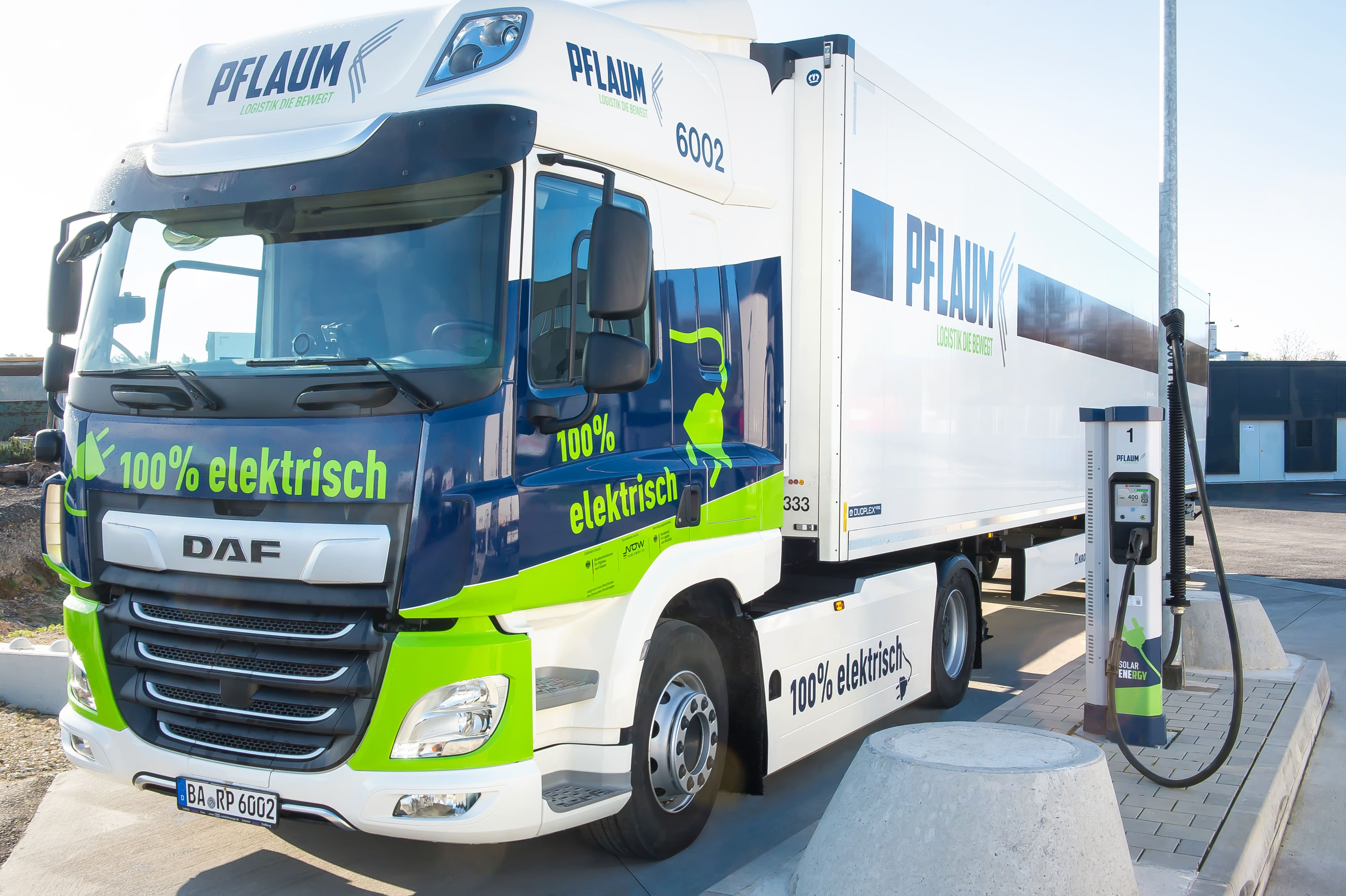
How Pflaum Evolved From Transport Transparency to a Complete Corporate Carbon Footprint
"We didn't want to wait until this topic caught up with us. Extending our transport emissions data into a full Corporate Carbon Footprint was a chance to get ahead and build experience."
.jpg)
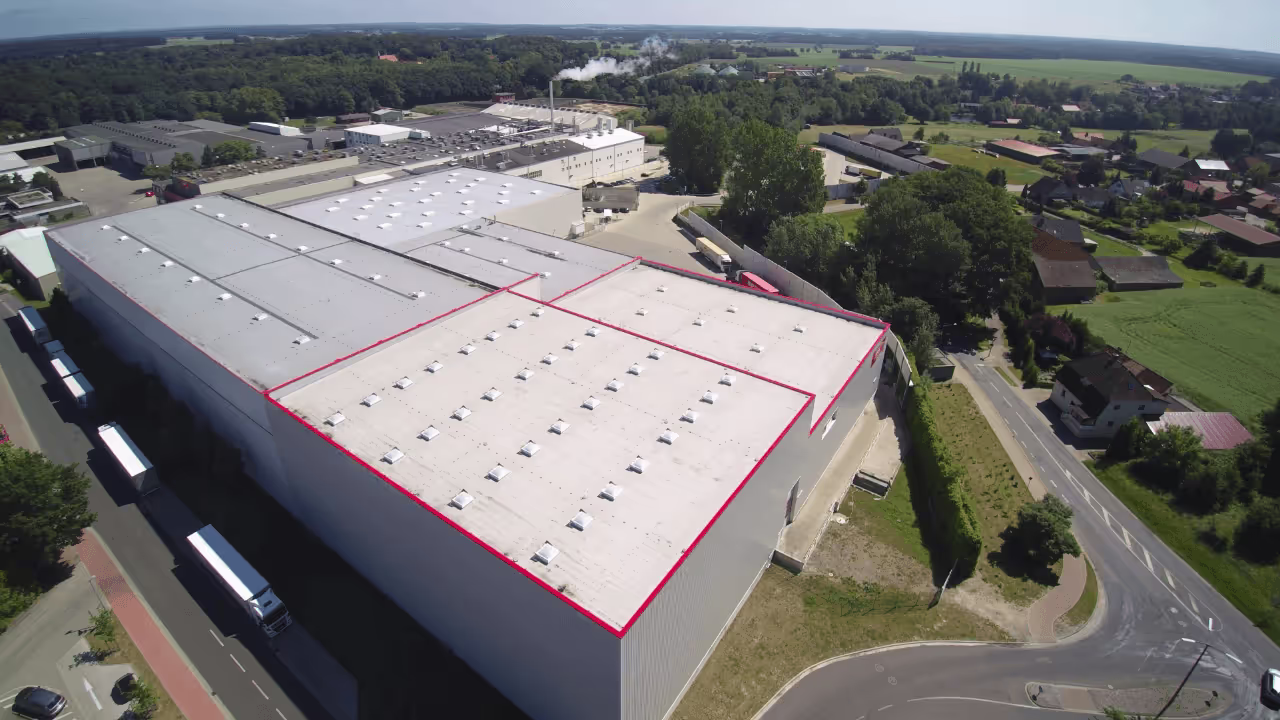
From Annual Reporting to Operational Carbon Accounting: How Lorenz Drives Emissions Intelligence
“Thanks to shipzero, we can now compare lanes and carriers on a consistent basis and build a reliable foundation for primary data – turning carbon accounting into a practical tool for better decisions.”

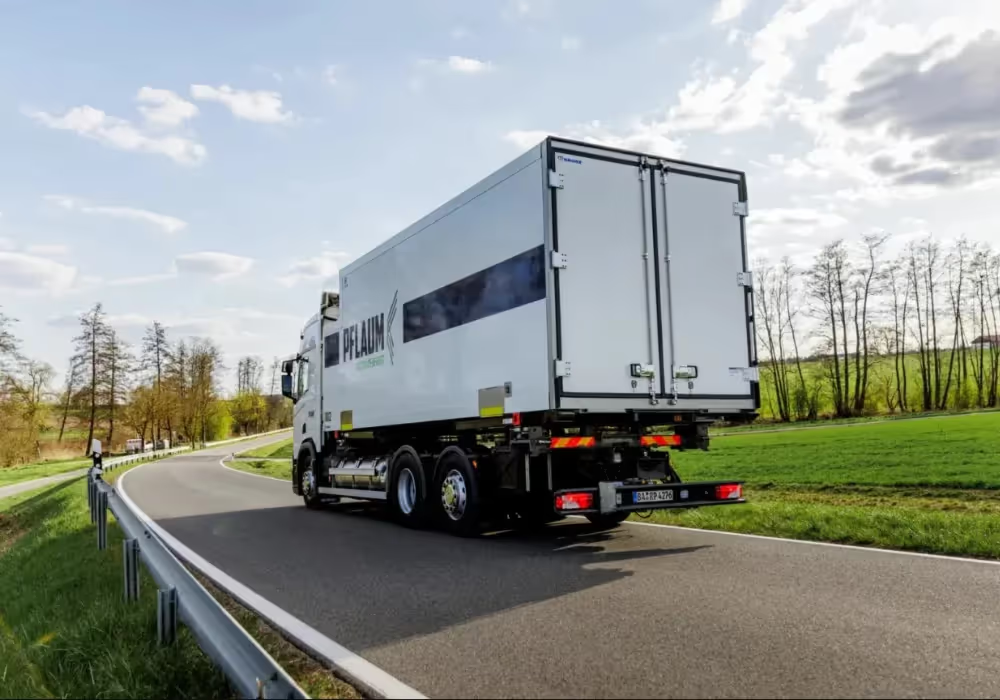
Book & Claim: Empowering customers to decarbonize supply chains for immediate Scope 3 CO₂e emissions reductions
"Book & Claim has enabled us to credibly reduce emissions for our customers in the short term and independently of existing processes."

.avif)
Why transparency of CO₂e transport emissions is just the beginning
“Thanks to shipzero, we can now specifically show our customers where they stand in the ranking of CO₂ transport emissions reduction.”

FAQs
Common questions about emissions intelligence for food logistics.
Yes. shipzero distinguishes between ambient, temperature-controlled, and mixed transport modes. This differentiation is critical for accurate emissions calculation in food logistics, as refrigerated and frozen transport generates significantly higher emissions than standard freight and is under higher regulatory scrutiny. Our platform captures these differences to provide realistic emissions data.
shipzero accurately models consolidated shipments across multi-stop tours and hub networks. Our allocation methodology distributes emissions fairly across individual shipments based on weight, distance, and route complexity – ensuring each shipment receives an accurate emissions value even in highly fragmented network structures.
Yes. Unlike specialized providers who focus primarily on inbound or sea freight, shipzero provides comprehensive coverage across your entire transport chain – inbound and outbound, road and multimodal. This gives you complete visibility across your food supply chain operations.
Responsibility depends on your Incoterms and contractual arrangements. shipzero helps clarify these responsibilities by providing flexible allocation rules and transparent data exchange. We support different accounting perspectives so each party can report accurately based on their scope of responsibility.
Food logistics is increasingly adopting alternative fuels like HVO and deploying battery-electric vehicles where feasible. shipzero offers its own validated Book & Claim approach aligned with Smart Freight Centre MBM guidance. This helps logistics providers create competitive, CO₂-reduced offers in tenders. shipzero's Book & Claim methodology is independently audited by Müller-BBM Cert, ensuring food logistics providers can offer verified, audit-ready emission reductions to cargo owners.