

How carriers and LSPs can turn Book & Claim into a competitive advantage
When implemented strategically, Book & Claim becomes a commercial tool: Read our blog article to learn how to differentiate in tenders, unlock new revenue streams, modernise fleets, and deepen relationships with cargo owners who are under intense pressure to decarbonize.
Key Takeaways
- Book & Claim turns sustainability into a sellable product: LSPs/carriers can generate reductions where it’s feasible (e.g., HVO, BEVs) and sell “green freight” units to cargo owners without forcing network redesign.
- It’s a commercial differentiator in tenders: cargo owners get verifiable, report-ready reductions (“insetting” logic) while keeping their carrier mix and lanes; you show up with a clearer decarbonization offer than competitors.
- Scale requires governance: define the product (scope/quality/pricing), assign ownership, and run traceable, standards-aligned accounting to avoid double counting and pass audits.
Action checklist
- Package Book & Claim as a priced offering (what units mean, what’s included, evidence provided).
- Focus ops on “best zones” (ports/metros/lane clusters) to generate reductions at lowest cost, then match to cargo owner demand.
- Implement registry + accounting + audit trail so sales can sell with confidence.
From sustainability cost to premium green freight offering
Most cargo owners today are under growing scrutiny from customers, investors, and regulators to reduce their Scope 3 emissions. They need verifiable low-carbon transport options. But they also need operational continuity. Cargo owners cannot afford to redesign their networks around a few “green lanes” or a narrow set of carriers with local access to sustainable fuels.
This is where Book & Claim comes in: It allows carriers and LSPs to separate where emission reductions are generated from where they are claimed. You can invest in low-emission interventions – for example using Hydrotreated Vegetable Oil (HVO) or battery electric vehicles (BEVs) on routes and hubs where they are feasible and cost-efficient – and turn the resulting emission reductions into units that cargo owners can claim elsewhere in their network.
For cargo owners, this means they can purchase "green freight" without changing their physical routes or carrier mix. For carriers and LSPs, it means sustainability can be positioned as a premium, hassle-free upgrade: clients gain audited emission reductions, and you retain full control over how and where you operate your assets.
Marketing Book & Claim to cargo owners
The starting point for most organizations is not technology, but storytelling. Book & Claim is still new to many decision-makers outside sustainability teams. Sales and account managers need a simple narrative they can explain in a few minutes – ideally one that connects directly to a cargo owner’s commercial reality.
A practical way to frame it is this: you enable owners to "inset" – to invest in emission reductions within their value chain – even if the physical measures take place in a different region or on different lanes. They can continue to run their network as usual while claiming verified reductions for their climate targets and reporting frameworks.
Concretely, effective Book & Claim marketing for carriers and LSPs often includes:
- identifying target customers with strong Scope 3 or net-zero commitments, such as retailers or industrial manufacturers
- building concise pitch materials that explain Book & Claim in operational language rather than technical jargon
- showing how green freight units can improve tender scores, support CSRD-aligned reporting, and underpin credible sustainability claims towards end customers
- illustrating the resilience angle: cargo owners are not locked into a handful of "green lanes“ but can access low-emission attributes wherever they are needed most in the network.
Partnerships can add further credibility. Co-branded offerings with recognized certification bodies or neutral emissions intelligence platforms such as shipzero help reassure shippers that reductions are calculated and allocated according to accepted frameworks. For commercial teams, this turns Book & Claim into a clear differentiator in bids: you are not only moving freight. You are also offering a verifiable, report-ready decarbonization service.
Turning green investments into recurring revenue
For many carriers and LSPs, the central question is how sustainability can pay for itself. Fleet electrification, access to HVO, or upgrades in infrastructure all require upfront capital. Without a route to monetize the associated emission reductions, these investments are harder to justify – especially in competitive, margin-sensitive markets.
Book & Claim provides that monetization route. When you operate low-emission services – for instance, BEVs in suitable urban areas or biofuel blends on selected lanes – the verified reductions can be booked into a pool and sold as units to cargo owners. Those units can be bundled with existing transport contracts or offered as separate green freight products, creating recurring revenue streams linked directly to your decarbonization activities.
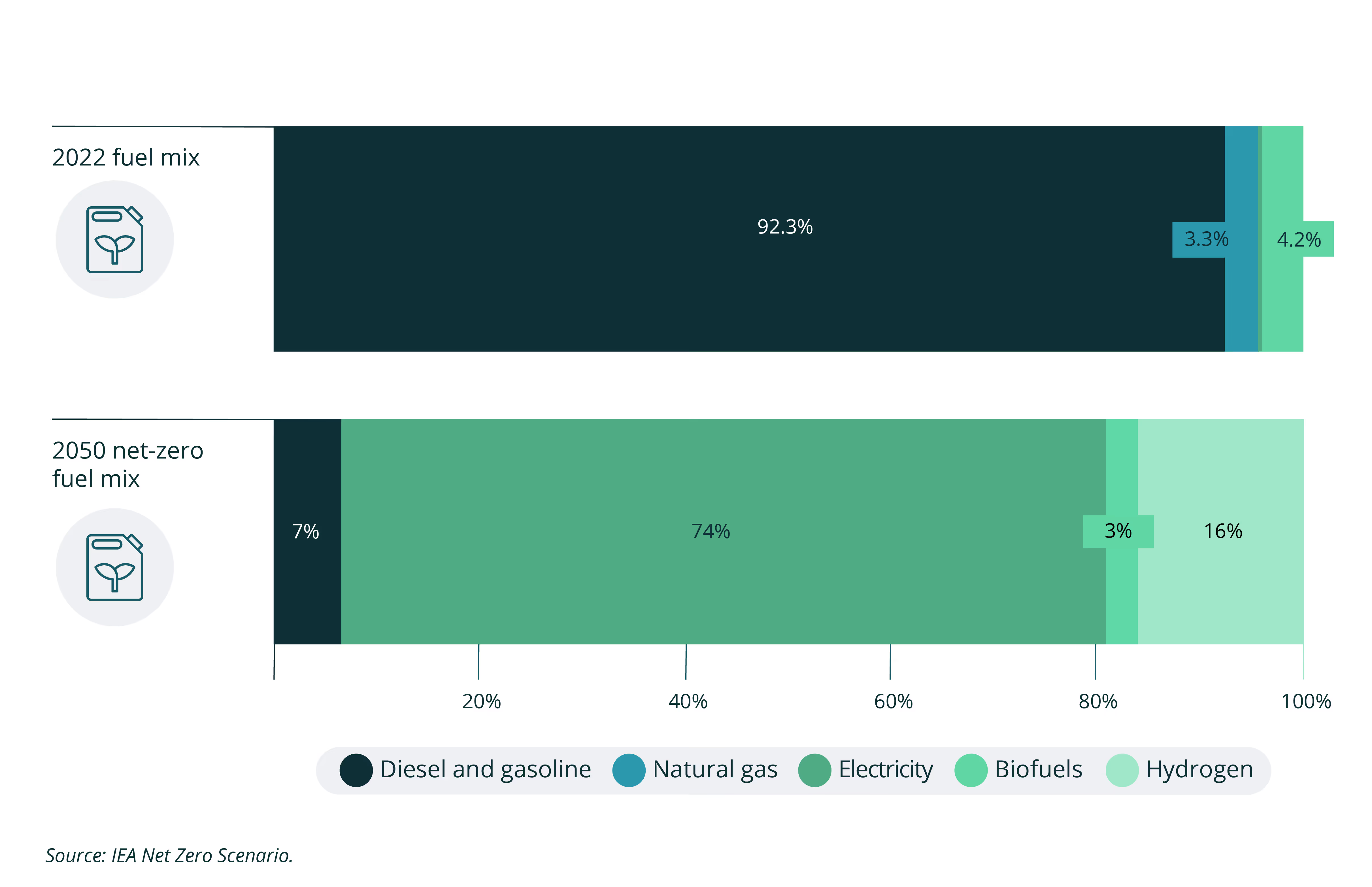
This approach also aligns well with broader market trends. Analyses from organizations such as the International Energy Agency point to a substantial role for electrification and sustainable fuels in heavy transport over the coming decades. By building Book & Claim capabilities around these shifts, carriers and LSPs can position themselves early in markets that are likely to grow, rather than treating sustainability as a compliance afterthought.
Using location and technology as a competitive edge
One of the most powerful – and sometimes overlooked – aspects of Book & Claim is how it changes the competitive map between locations and technologies. Instead of being constrained by where sustainable fuels are currently available, you can use those locations as strategic anchors for your offerings.
Imagine a carrier with access to HVO or BEV charging infrastructure in a handful of ports and metropolitan areas. On those routes, low-emission services can be operated at scale and at relatively attractive cost. Through Book & Claim, the emission reductions generated there can then be matched to cargo owners whose main volumes sit in completely different regions – for example, rural areas without local access to sustainable fuels.
This creates several advantages:
- operations teams can focus low-emission services where they are most practical, without having to redesign the entire network
- data and analytics teams can match high-impact reduction opportunities to those customers with the strongest decarbonization needs
- procurement can source fuels or technologies opportunistically in regions where they are most competitive
- sales can go into tenders with concrete, location-agnostic decarbonization offers that many competitors cannot replicate
Over time, this flexibility supports a more resilient business model. As regulations tighten and cargo owners raise their expectations, carriers and LSPs that have learned to use Book & Claim as a matching mechanism – between locations, technologies and client needs – will be better placed to win and retain key accounts.
Building the internal capabilities to succeed
To make Book & Claim work at scale, carriers and LSPs need more than a concept. They need internal capabilities that connect commercial, operational and sustainability perspectives. In practice, that often means three things.
- A clear product definition: Book & Claim should be described as a concrete green freight offering – with defined scopes, quality criteria, and pricing logic – rather than a vague "sustainability option".
- Dedicated ownership: someone in the organization, often in a sustainability, product or business development role, needs to be accountable for how units are generated, allocated, and communicated.
- Robust data and governance: verifiable calculations, traceable unit histories, and alignment with recognized frameworks are essential to avoid double counting and to withstand customer and auditor scrutiny.
Specialized platforms can support this by combining emissions accounting with a verified Book & Claim registry. They help carriers and LSPs translate individual fueling events or vehicle data into credible, auditable units that can be offered to cargo owners with confidence.
Conclusion: from compliance to commercial advantage
For carriers and LSPs, the strategic question is no longer whether Book & Claim will matter, but how quickly they can turn it into a differentiator. Those who move early can reframe sustainability as a revenue-generating service, build modern fleets with clearer business cases, and become preferred partners for cargo owners navigating their own transition pathways.
By combining thoughtful marketing, smart monetization models, and careful matching of locations, technologies and client needs, Book & Claim evolves from an abstract accounting tool into a practical lever for growth. In a market where low-emission logistics is becoming a selection criterion rather than a niche, that shift can be the difference between merely keeping up and setting the pace.
Download our white paper and learn more about the commercial benefits of Book & Claim.
To learn how your company can deal with complex emission data structures, please get in touch with one of our industry experts.


Related articles