

How to unlock CO₂ reduction potential in supply chains at tradelane-level
Many cargo owners and logistics service providers (LSP) struggle with fragmented CO2 emission data, missing reduction opportunities worth up to 95% per shipment. Gain insights with our article into data-driven strategies to systematically identify supply chain decarbonization potential at tradelane-level.

Key Takeaways
- Big CO₂ reduction potential sits at tradelane level, but cargo owners/LSPs miss it because emissions data is fragmented and hard to analyze systematically.
- Three blockers: data collection (many sources), data quality (validation is slow), and data integration (classic BI can’t handle tradelane complexity well).
- Best practice = centralize → hotspot → plan: aggregate all transport data, surface highest-impact tradelanes, then turn ad-hoc initiatives into prioritized programs (e.g., via a tradelanes dashboard).
Action checklist
- Centralize multi-country / multi-carrier transport data into one place.
- Define tradelane “hotspots” with thresholds and compare routes/modes for the same lane.
- Convert findings into a ranked reduction roadmap with measurable targets.
The logistics industry stands at a critical juncture: with logistics accounting for 8-10% of global greenhouse gas emissions, the pressure to decarbonize supply chains has never been more urgent. Yet despite this mounting pressure, many cargo owners and logistics service providers struggle to identify and act upon meaningful emission reduction opportunities within their operations.
The Challenge: Identifying reduction potentials in tradelanes
Both LSPs and cargo owners increasingly recognize the need to evaluate improvement potentials within their recurring transport relations and assess the impact of intermodal solutions. However, organizations struggle to identify reduction potentials among their tradelanes and can hardly plan initiatives with data-backed insight.
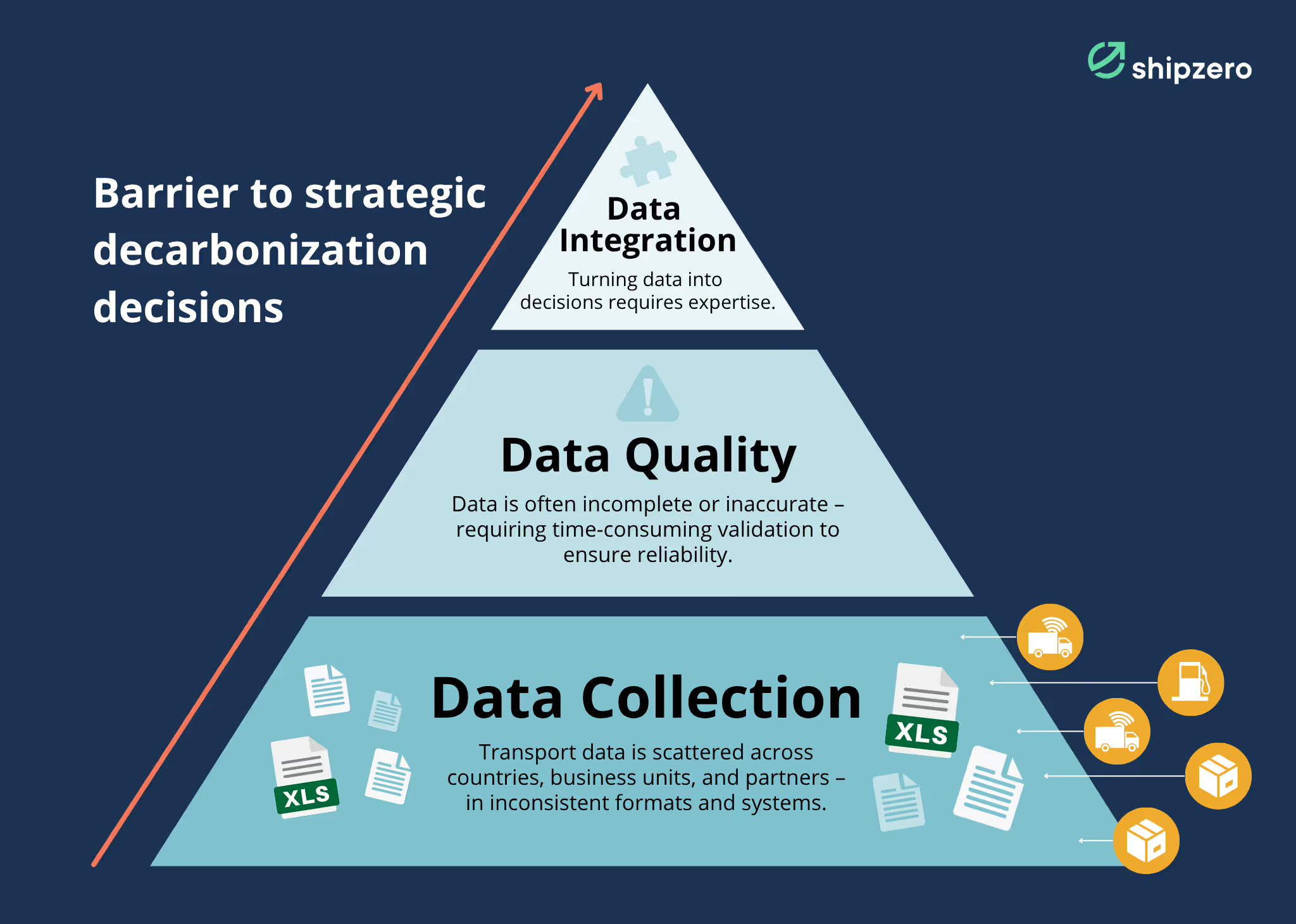
This challenge stems from three fundamental root causes that affect both target groups:
- Data Collection: Aggregating comprehensive transport data from multiple countries and business units remains a tedious and resource-intensive process. Organizations often find themselves manually gathering information from disparate sources - regional offices, local carriers, freight forwarders, and internal systems - each with different data formats, reporting standards, and accessibility levels. This fragmented approach not only consumes significant time and personnel resources but also creates gaps in coverage that undermine the reliability of any subsequent analysis.
- Data Quality: Ensuring that the collected data is correct and complete presents another significant hurdle. Transport activities often involve multiple parties, complex routing decisions, and various documentation standards across different regions and modes. Validating data accuracy requires extensive cross-referencing and verification processes that can extend project timelines by weeks or even months. Incomplete or inaccurate data leads to flawed analysis and potentially counterproductive emission reduction initiatives.
- Data Integration: The final challenge lies in merging collected data into a cohesive, accessible format for decision-making. Traditional business intelligence (BI) solutions, while effective for standard business metrics, often prove inadequate for the complex, multi-dimensional nature of tradelane analysis. The need to correlate route-specific emissions with load factors, modal choices, seasonal variations, and business unit requirements creates analytical complexity that exceeds conventional BI capabilities. As a result, even organizations that successfully collect and validate their transport data struggle to make it practically accessible for strategic emission reduction planning.
The Consequence: Initiative-based rather than strategic action
These systemic challenges force organizations into reactive, initiative-based singular actions to emission reduction rather than enabling strategic, data-driven procedures. Without comprehensive tradelane-level insights, sustainability efforts often rely on industry best practices, competitor benchmarking, or intuitive assumptions rather than organization-specific optimization opportunities.
This approach limits the potential impact of emission reduction efforts. Additionally, it risks misallocating resources toward initiatives that may not deliver the highest return on sustainability investment.
Best practice: data-driven emission management
The key to unlocking this potential lies in moving beyond intuition-based decisions toward systematic, data-driven emission management. Rather than implementing initiatives based on assumptions or industry best practices, successful organizations are adopting analytical approaches that:
- Centralize Multi-Source Data – aggregate transport activities from all business units, geographies, and logistics partners into a single, accessible platform.
- Identify Hotspot Opportunities – systematically surface the highest-impact reduction opportunities by comparing different routes for the same tradelane.
- Support Strategic Planning – transform ad-hoc sustainability initiatives into structured, priority-based reduction programs with measurable objectives.
The solution: Turning data into action
Our completely overhauled Tradelanes dashboard exemplifies this strategic approach to emission management. As a core feature of the shipzero emission management platform, Tradelanes tracks directional shipping connections between departure and arrival locations, providing actionable emissions insights through an intuitive, dynamically filterable interface.
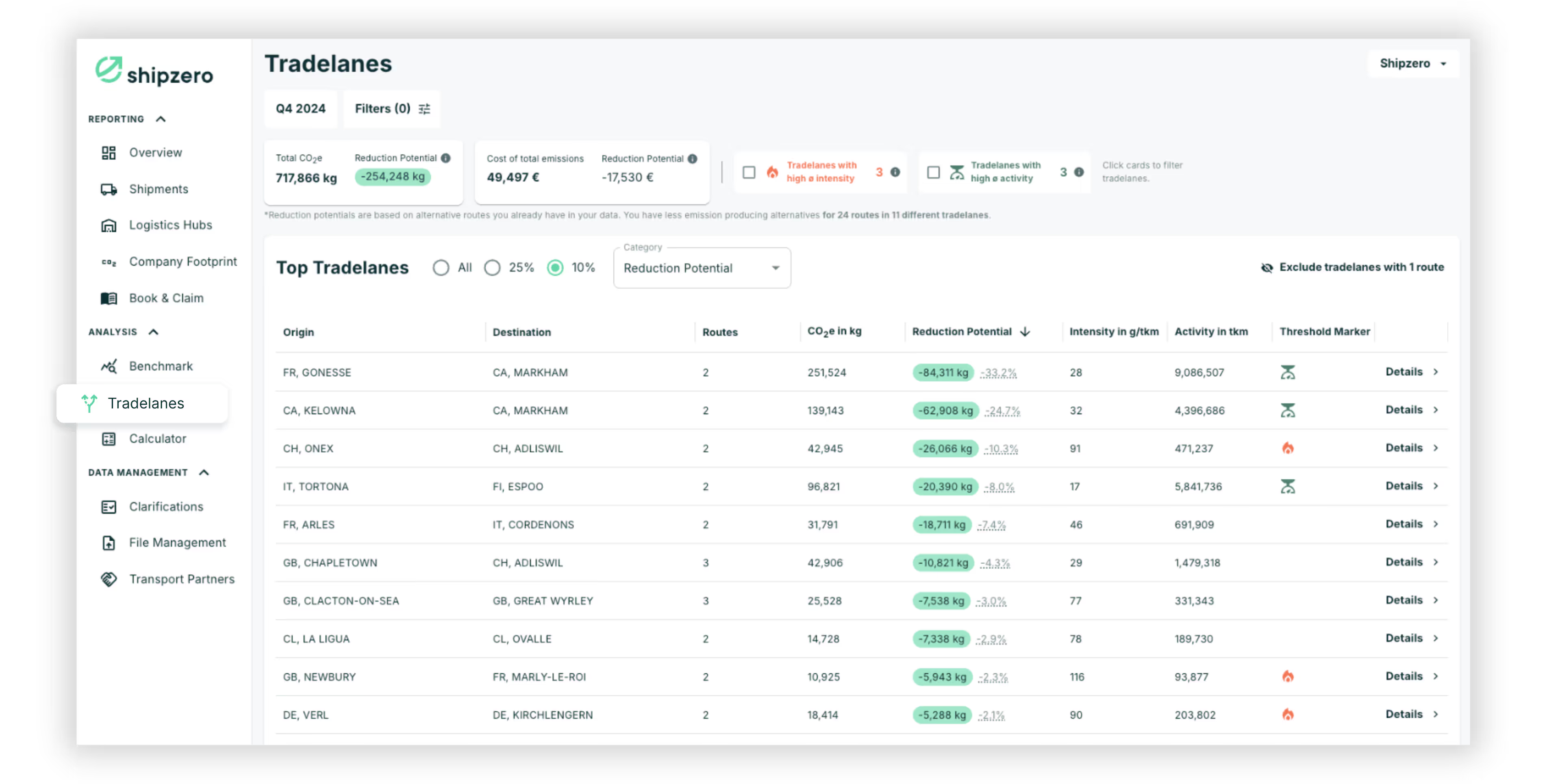
Instead of manually analyzing thousands of transport activities, sustainability managers can quickly identify emission hotspots across their entire network and enable decision-makers within their organization accordingly to execute decisions based on the findings. Clear threshold markers help focus attention on the most promising opportunities for carbon reduction.
Cargo owners and logistics service providers should embrace the opportunity to unlock the full CO2 reduction potential of their supply chain networks at tradelane-level. The organizations that make this transition successfully will not only achieve their emission reduction objectives but will also discover competitive advantages through improved operational efficiency and strategic positioning.
To learn how your company can benefit from Tradelanes, please get in touch with one of our industry experts.


Related articles