
How Bruhn Used SQAS to Build Emissions Management on Data It Already Had
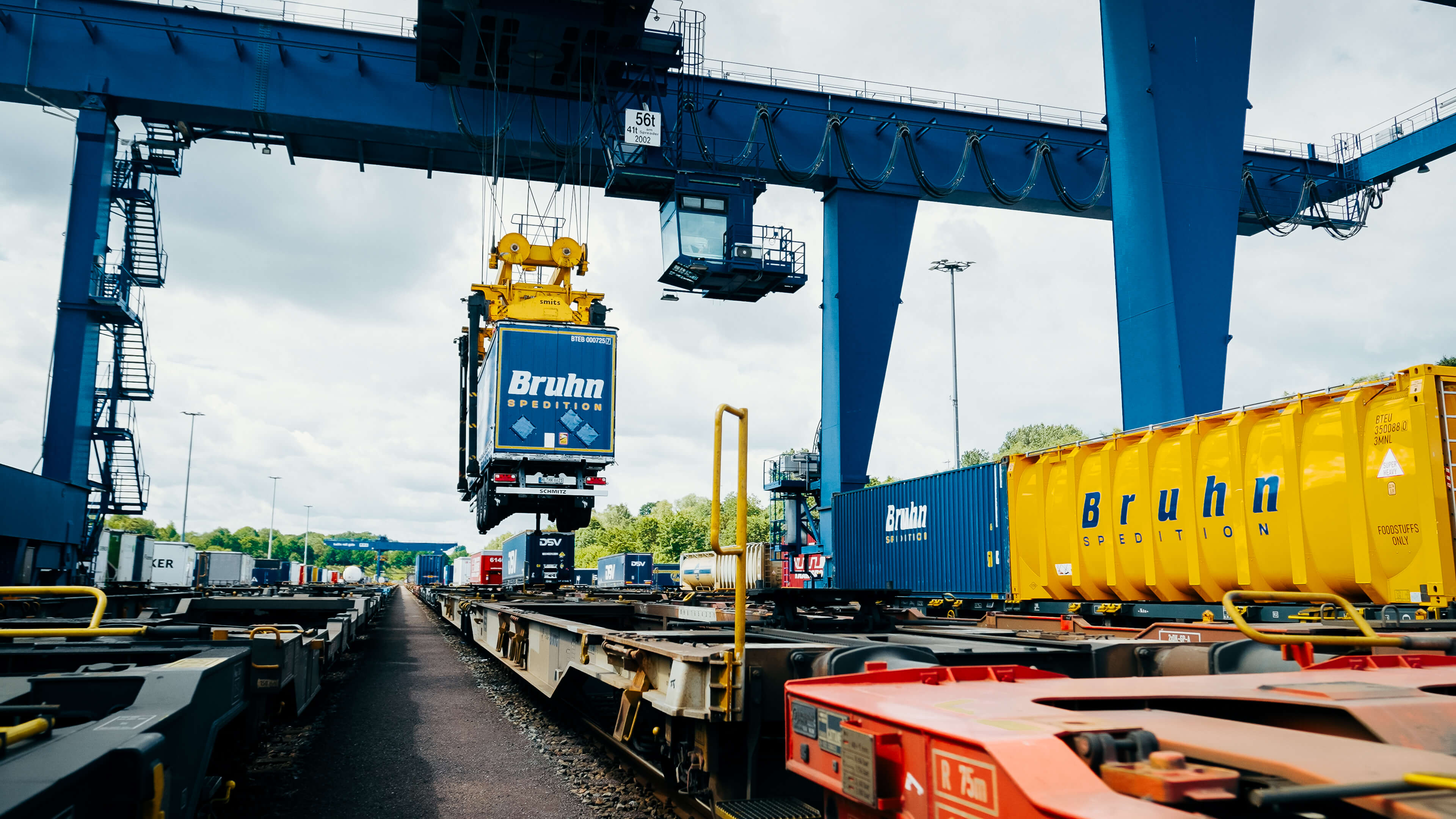
Bruhn Spedition, a family-owned intermodal forwarder from Lübeck, owns its containers, tank units and trailers, but road haulage, rail and short-sea shipping run through partners, so much of the data the revised SQAS 2025 questionnaire asks for sits outside its own systems. Together with shipzero, Bruhn built a traceable emissions calculation on the data it already had, with every assumption documented for the assessor. The outcome was 97% in the greenhouse gas section at both assessed sites, 90% overall at the Lübeck headquarters, and a basis for moving from emissions reporting to emissions management.
Summary
For Bruhn Spedition, greenhouse gas reporting started as a compliance and customer-reporting requirement. Over time, however, it became something broader: a way to better understand transport operations, respond to increasing customer expectations, and prepare for a rapidly evolving regulatory landscape. That evolution was supported by shipzero, one of Bruhn's longest-standing sustainability partners. Since 2020, shipzero has helped the intermodal logistics provider build a structured and transparent approach to emissions management, expanding from annual emissions reporting into corporate carbon footprint calculations, transport optimization initiatives and support for the company's SQAS assessment in June 2026.
When the revised SQAS 2025 questionnaire introduced significantly higher expectations regarding greenhouse gas reporting, ISO 14083 and GLEC Framework alignment, Bruhn faced a challenge shared by many logistics service providers: how to produce robust and traceable emissions data when much of the underlying operational information is held by subcontractors, rail operators, shipping lines and third-party service providers. Working together, Bruhn and shipzero built the calculation on the data Bruhn already collected, without changing its systems or data collection. Bruhn contributed practical knowledge of its transport operations; shipzero contributed methodology, expertise and platform support.
Bruhn uses shipzero to:
- Calculate transport emissions aligned with ISO 14083 and the GLEC Framework across complex intermodal transport chains.
- Consolidate and manage emissions data across road, rail and short-sea shipping operations.
- Support greenhouse gas reporting for customers, tenders and SQAS assessments.
- Calculate and monitor corporate carbon footprint data.
- Build the data basis for lane analysis and lower-emission routing decisions.

.avif)

The SQAS 2025 questionnaire aligned its greenhouse gas section with ISO 14083 and the GLEC Framework and put much stronger emphasis on primary data. With a fully subcontracted road network and its longest legs by rail and short-sea shipping, most of the operational data sits with carriers, shipping lines and cleaning stations rather than in Bruhn's own systems.

Together, Bruhn and shipzero recalculated the emissions data against the new requirements without changing Bruhn's systems or data collection. Where primary data was unavailable, GLEC Framework defaults and average values were applied, and every assumption was documented so the assessor could trace the reasoning directly in the platform.
Challenge: New SQAS Questionnaire and an Intermodal Reality
The 2025 SQAS revision fundamentally changed expectations surrounding greenhouse gas management. The revised questionnaire aligned much more closely with ISO 14083 and the GLEC Framework and placed greater emphasis on transparency, primary data and traceability. For many logistics providers, this represented a significant step forward. The questionnaire applied to all assessments from 15 September 2025, and Bruhn was assessed under it in June 2026.
For Bruhn, the challenge was intensified by its operating model. The company operates an extensive intermodal network covering Northern Europe, Scandinavia, the Baltic region, the British Isles, Ireland and the Iberian Peninsula. From offices in Germany, Belgium, Sweden and Finland, Bruhn coordinates dry bulk, liquid bulk and packed-goods transport using containers, tank units, pressurized units, steel containers, trailers and temperature-controlled trailers.
However, Bruhn does not operate its own truck fleet. Road transport is performed by subcontracted partners, while the longest transport legs are typically carried out by rail operators and short-sea shipping lines. As a result, much of the operational data requested by SQAS does not sit directly within Bruhn's own systems.
The challenge became particularly visible in liquid bulk logistics. Heating consumption can be measured and documented through the tank units themselves. Cleaning activities are more complex. Bruhn relies on approved EFTCO cleaning stations selected according to customer requirements and therefore does not have direct control over the operational data generated during those activities.
The same challenge applies across rail and maritime transport, where actual voyage-specific emissions data is often unavailable.
“We have our own transport equipment, but we do not operate our own truck fleet. That means no direct control over, and no direct monitoring of, fuel consumption and CO₂ emissions.”
Tudor Ciolan, Head of QHSE / CISO, Bruhn Spedition
Solution: Building on Existing Data Instead of Rebuilding Processes
The SQAS project emerged from an already established partnership. When Tudor Ciolan assumed responsibility for the QHSE function, he initiated a review of existing supplier contracts and service providers. At the time, shipzero’s role was largely perceived as emissions reporting support, prompting questions about whether the platform delivered sufficient value beyond annual reporting.
Instead of responding with a commercial sales approach, shipzero proposed a strategic discussion focused on Bruhn's broader needs and future sustainability ambitions. That discussion fundamentally changed the direction of the partnership.
Over time, the relationship evolved beyond transport emissions reporting and expanded into:
- Corporate Carbon Footprint calculations.
- SQAS assessment preparation.
- Transport optimization initiatives.
- Customer-facing sustainability reporting.
By the time the revised SQAS requirements arrived, shipzero already held around five years of Bruhn's transport emissions data and understood the company's operational model in detail. This proved critical. Rather than introducing entirely new systems, telematics integrations or data collection processes, shipzero worked with Bruhn's existing operational environment. The focus shifted from collecting more information to making better use of the information already available.
Together, both organizations reviewed the revised SQAS requirements, identified potential data gaps, documented assumptions where primary data was unavailable and aligned the calculations with ISO 14083 and the GLEC Framework, using GLEC defaults for rail and short-sea legs and average values for tank cleaning where carriers and cleaning stations could not supply actual data. shipzero translated these inputs into a structured and auditable reporting framework that allowed the assessor to understand not only the calculations themselves, but also the reasoning behind them.
“We knew from the beginning that we would never obtain actual emissions data from every shipping line, train operator or spot-market carrier. The important point was finding a methodology that was transparent, traceable and accepted within the SQAS framework. shipzero helped us achieve exactly that.”
Tudor Ciolan, Head of QHSE / CISO, Bruhn Spedition
Results: A Strong Result Against a Higher Bar
Bruhn's SQAS assessment in June 2026 produced:
- 90% overall score in Lübeck.
- 89% overall score in Antwerp.
- 97% score in the greenhouse gas section at both locations.
The revised SQAS questionnaire raised expectations considerably compared with previous assessment cycles and reflected the growing importance of sustainability reporting across the logistics sector. Customers increasingly expect transparency regarding greenhouse gas emissions and want confidence that reported figures are supported by recognized methodologies and robust processes. Several customers had been waiting for Bruhn's reassessment and responded positively to the improvement, and at least one has asked to go through the approach in detail.
Bruhn scored 85% in 2023, under the 2022 questionnaire. For the revised questionnaire it set an internal target of 90% overall. Together with shipzero’s support, that target was reached at the Lübeck headquarters, with 89% in Antwerp. The assessor also pointed to Bruhn's investment in its quality management systems, and in actually operating to them, as a significant factor in the result.
The assessor found the shipzero platform straightforward to use and raised no findings on the emissions data. The points Bruhn did not score in the greenhouse gas section trace back to its operating model: the questionnaire asks whether complete operational data is received from every transport partner, which a business working with spot and chartered carriers cannot yet confirm.
Bruhn considers those questions right as they stand. Full visibility of partner data is the direction to move in, and a perfect score would remove the reason to keep improving.
Complete primary data coverage is challenging to achieve in multimodal transport chains that run through subcontractors. Success depends on understanding data limitations, applying consistent methodologies and maintaining complete transparency regarding assumptions. That principle became one of the strongest outcomes of the project.
Outlook: From Reporting to Routing
Bruhn's focus is shifting beyond reporting towards the practical use of emissions intelligence. The next phase of cooperation with shipzero includes analysis of transport lanes with the highest emissions impact and identifying opportunities where alternative routings may offer environmental improvements without compromising operational performance.
At the same time, work on corporate carbon footprint calculations continues. Started with Scope 1 and 2, the work extends Bruhn's view from its transport operations to the company as a whole. For Bruhn, this is a strategic investment in understanding its environmental footprint, in preparing for future reporting requirements and in supporting informed decisions.
The project shows how logistics providers can move from emissions reporting towards emissions management without fundamentally changing their operational processes. The partnership continues to evolve, guided by a shared objective: transforming emissions data into practical business intelligence.
“Do not prepare for SQAS as you would prepare for an ISO certification. They have similarities, but they are quite different in their assessment. Give yourself time to readjust your way of thinking and start at least a year up front. The SQAS result was an important milestone, but the real value is understanding the data well enough to make better decisions in the future. shipzero has been a crucial partner in that journey.”
Tudor Ciolan, Head of QHSE / CISO, Bruhn Spedition
Learn more about how shipzero's Client & Audit Reporting and Partner & Carrier Integration solutions work for logistics service providers in the chemicals industry. Here you will find a case study from the same sector: How Lanfer mastered a demanding SQAS audit in record time.
Bruhn Spedition is a family-owned intermodal forwarder based in Lübeck, Germany, with more than 125 years of history and additional locations in Antwerp, Landskrona and Helsinki. The company coordinates dry bulk, liquid bulk and packed-goods transport through integrated road, rail and short-sea shipping solutions, using its own containers, tank units, pressurized units, steel containers, trailers and temperature-controlled trailers, and runs warehousing at its Lübeck site. Bruhn is a member of ECTA and holds SQAS and FSSC 22000 certification.


Read similar stories


Calculating Shipment-Level Emissions Across a Complex Groupage Network
.jpg)

How Rittal Gained Trade Lane Visibility and Turned Transport Data into a Basis for Action