Sustainable fuel attribution methods: complementary building blocks
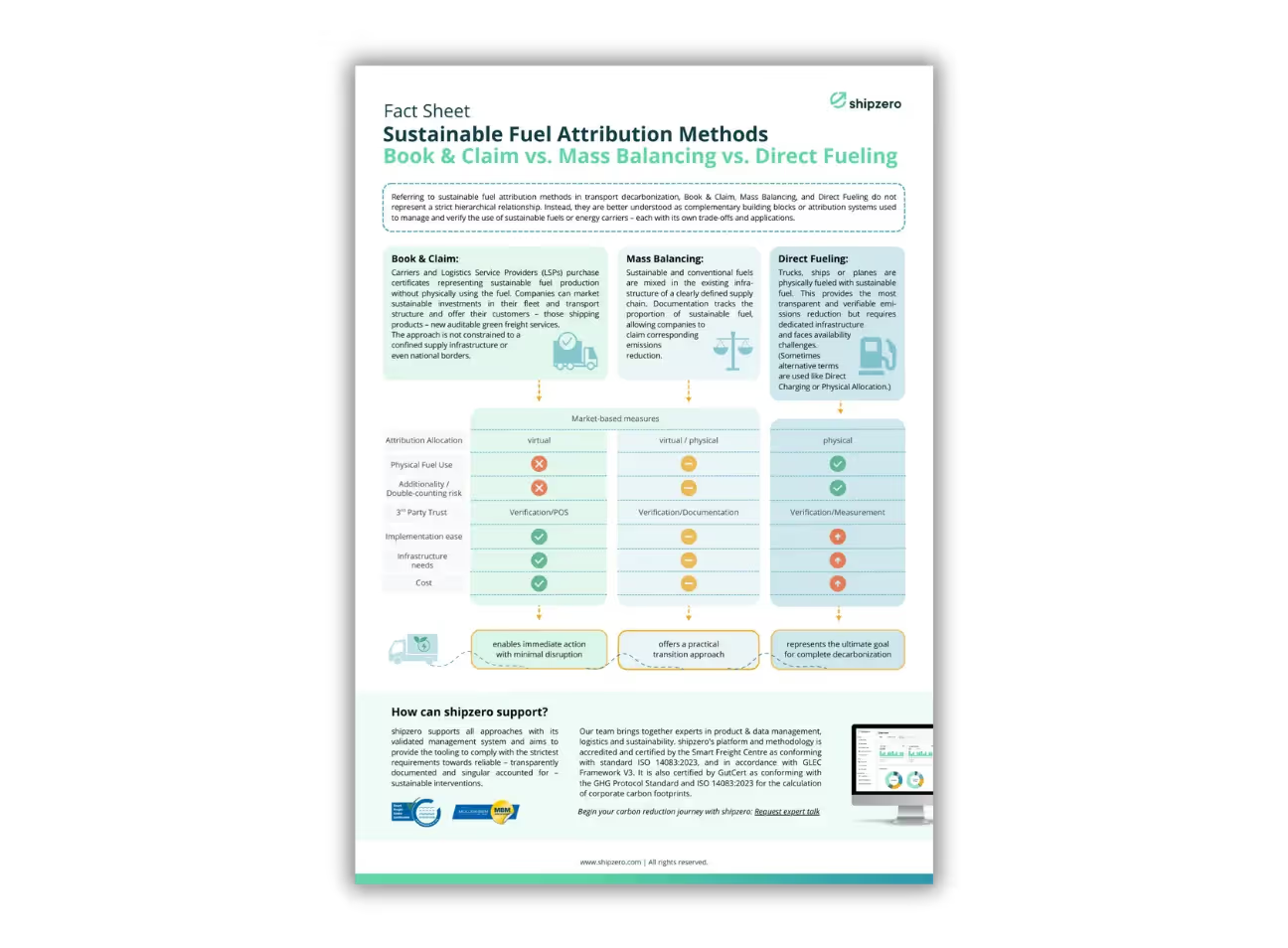
Sustainable fuel attribution methods are systems used to manage and verify the use of sustainable fuels or energy carriers in transport decarbonization. Book & Claim, Mass Balancing (also called mass balance) and Direct Fueling do not represent a strict hierarchical relationship. They are better understood as complementary building blocks, each with its own trade-offs and applications.
Book & Claim: enables immediate action with minimal disruption
Carriers and logistics service providers (LSPs) purchase certificates representing sustainable fuel production without physically using the fuel. Companies can market sustainable investments in their fleet and transport structure and offer their customers, the companies shipping products, new auditable green freight services.
The approach is not constrained to a confined supply infrastructure or even national borders. Attribution allocation is virtual, and third-party trust is based on verification through proof of sustainability.
Mass Balancing: offers a practical transition approach
Sustainable and conventional fuels are mixed in the existing infrastructure of a clearly defined supply chain. Documentation tracks the proportion of sustainable fuel, which allows companies to claim the corresponding emission reduction.
Attribution allocation is virtual and physical, and third-party trust is based on verification through documentation.
Direct Fueling: represents the ultimate goal for complete decarbonization
Trucks, ships or planes are physically fueled with sustainable fuel. This provides the most transparent and verifiable emission reduction, but it requires dedicated infrastructure and faces availability challenges. Alternative terms sometimes used are Direct Charging or Physical Allocation.
Attribution allocation is physical, and third-party trust is based on verification through measurement.
How the methods compare
|
Market-based measures |
|
|
Book & Claim |
Mass Balancing |
Direct Fueling |
| Attribution allocation |
Virtual |
Virtual / physical |
Physical |
| Physical fuel use |
No |
Partly |
Yes |
| Additionality / double-counting risk |
Higher risk |
Medium risk |
Lower risk |
| Third-party trust |
Verification through proof of sustainability |
Verification through documentation |
Verification through measurement |
| Implementation |
Easy |
Medium effort |
Most demanding |
| Infrastructure needs |
Low |
Medium |
High |
| Cost |
Low |
Medium |
High |
Summary of the comparison shown in the fact sheet.
Key terms explained
- Attribution allocation: how the emission reduction of a sustainable fuel is assigned to a company, shipment or customer. Virtual means through certificates or documentation, physical means through the fuel actually used.
- Certificate: a document that represents a quantity of sustainable fuel produced and can be purchased separately from the physical fuel.
- Chain of custody: the documented tracking of a fuel or claim along the supply chain.
- Proof of sustainability (PoS): documentation that shows a fuel meets defined sustainability criteria.
- Additionality: whether an intervention causes an emission reduction that would not have happened otherwise.
- Double counting: the same emission reduction being claimed by more than one party.
- Market-based measures (MBM): instruments that channel investment toward decarbonization, such as Book & Claim.
- LSP (logistics service provider): a company that manages or executes transport services.








.svg)